


What Is a Snowman? Where the Three Balls Came From, Why It Belongs to Christmas, and Snowmen in Thailand
A snowman is a figure of packed snow: three stacked balls, stick arms, coal eyes, a carrot nose and, if someone has one to spare, a hat and a scarf. The earliest known picture of one dates from 1380.
Here is what the three balls are for, where the first snowmen turn up in history, how a plain winter figure became a Christmas one, and where Thai families meet snowmen in December in a country with no confirmed snowfall on record.
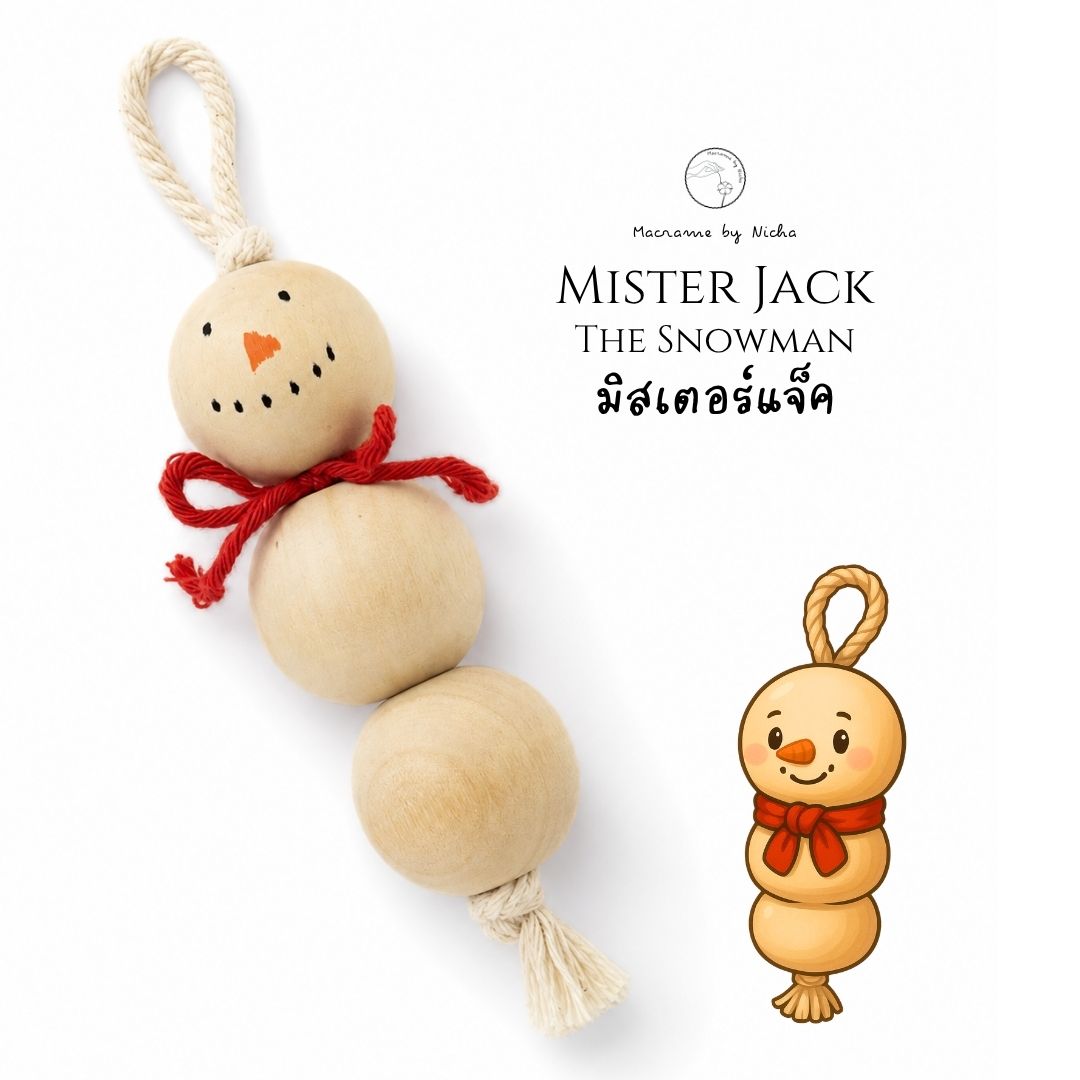
And if you would rather meet a snowman that survives Bangkok heat before you meet the historical ones, he is right here.
What a snowman is, and why three balls
The classic parts
The western snowman is three spheres stacked in decreasing size: a wide base, a torso and a head. Then come stick arms, eyes of coal or stone, a carrot nose, and whatever is at hand for the rest: a hat, a scarf, sometimes a pipe.
The German tradition lists almost the same set, with a pot or bucket for the hat and a broom tucked under one arm.
The 3:2:1 rule
The three balls are there for balance. The wide base carries the weight of everything above it.
Engineering students at Bluefield State College suggested a 3:2:1 diameter ratio from bottom to top, a rule of thumb that Smithsonian Magazine passed on in its look at the physics of snowmen.
Two balls in Japan
In Japan the figure is 雪だるま, yuki daruma (snow Daruma), and it has two balls, a large base and a smaller head, with charcoal features and usually no arms.
The name comes from the Daruma doll, the round, armless, legless toy modelled on Bodhidharma, the founder of Zen, which was common in Japan by the mid-18th century. Edo-period prints by Hiroshige and Hokusai already show snow figures, though they looked different from today's two-ball form.
The Thai word: snow doll, not snow human
Thai has two words that could translate "snowman", and they mean different things. ตุ๊กตาหิมะ (snow doll) is the figure children build when snow falls, and it is the title of the Thai Wikipedia article on the subject.
มนุษย์หิมะ (snow human) is the Yeti, the creature of Himalayan legend, and that is how Thai media use it. So this article, and the Thai search, use ตุ๊กตาหิมะ (snow doll). The "doll" in the name suits a cotton snowman rather well.
The first snowman in history, and the ones that followed
1380: a drawing in the margin
The earliest known picture of a snowman is a small satirical drawing in the margin of a Book of Hours, a Christian prayer book, dated 1380 and held at the Royal Library in The Hague.
It was found by Bob Eckstein, who spent seven years researching his book The History of the Snowman (2007). One outlet prints the date as 1308; the other sources, including Thai Wikipedia, give 1380.
1494: Michelangelo and a statue of snow
Vasari's Life of Michelangelo records that one winter, when heavy snow fell in Florence, Piero de' Medici had the young artist make a statue of snow in the courtyard of the Medici palace, "which was very beautiful". That was January 1494, and Michelangelo was 20.
Vasari never says what the statue depicted. The popular line that Michelangelo built a snowman comes from a 1900 magazine story, so the honest version is a snow statue by Michelangelo, subject unknown.
1511: Brussels fills with snow figures
In the winter of 1510 to 1511 Brussels froze for six weeks, and the city answered with about 110 snow figures, satirical and political, including one outside the Coudenberg palace aimed at the absent Charles V.
The poet Jan Smeken recorded them in "Dwonder van claren ijse en snee" (The wonder of clear ice and snow). The thaw ended the show, and brought flooding with it.
1853: the first photograph
The first known photograph of a snowman was taken around 1853 to 1854 by Mary Dillwyn, Wales's earliest female photographer. Her snowman has lumps of coal for its features, and the album it sits in, the Llysdinam album, is kept at the National Library of Wales.
How the snowman became a Christmas figure
See all our Christmas ornaments
Germany: from grim to cheerful
The German word Schneemann (snow man) first appears in writing in 1770, in a Leipzig children's songbook by Christian Felix Weisse. Eighteenth-century engravings show him as a grim winter figure with a raised broom.
During the 19th century he turned cheerful and moved into children's books, and by 1900 snowmen were hanging on German Christmas trees as ornaments. That last date matters to us: a snowman on the tree is a tradition more than a century old.
Cards, adverts and a jolly new look
Snowmen appeared on cards and trading cards in the late 19th century. In the 1920s and 1930s advertising gave the figure its modern jolly look, heavyset with a straw hat and a bulbous nose, resembling the comedian W.C. Fields, according to Eckstein.
Frosty, 1950
"Frosty the Snowman" was written by Walter "Jack" Rollins and Steve Nelson and published on 2 June 1950. Gene Autry, fresh from his 1949 "Rudolph" hit, recorded it first with the Cass County Boys, and it reached number 7 on the US pop chart and number 4 on the country chart. Jimmy Durante recorded it the same year.
One detail surprises people: the lyric never mentions Christmas. Frosty is a winter song that the season adopted.
The Rankin/Bass television special followed on 7 December 1969 on CBS, straight after A Charlie Brown Christmas, with Jimmy Durante narrating in his final film role and Jackie Vernon as the voice of Frosty. Eckstein dates the friendly family snowman we know today to that song and that special.
The Snowman, 1978 and 1982
Raymond Briggs published The Snowman in 1978, a wordless picture book drawn in coloured pencil. Channel 4 first broadcast the animated film on 26 December 1982, directed by Dianne Jackson with music by Howard Blake.
Its one song, "Walking in the Air", was sung in the film by Peter Auty, a choirboy at St Paul's Cathedral. The film earned an Oscar nomination and a BAFTA TV award. Briggs died in August 2022, aged 88.
How to build a real snowman, and the tallest ever built
Snow scientists say the best building snow falls at about 0 C and holds 3 to 15 percent liquid water. That thin film of water glues the crystals together, and the pressure of your hands melts a little more, which refreezes as a bond.
Dry powder at well below freezing will not pack, however hard you try.
The Guinness record for the tallest snowperson belongs to Olympia, a snow woman 37.21 m tall, completed on 26 February 2008 by the residents of Bethel, Maine, and the surrounding towns after a month of work. She was named after Senator Olympia Snowe, and wore a 130 ft scarf, truck tyres for buttons and a chicken-wire carrot nose 8 ft long.
Bethel also built the previous record holder, Angus, 34.62 m, in 1999.
Snowmen in Thailand, where it does not snow
Has it ever snowed in Thailand?
Thailand has no confirmed snowfall record. The one event people cite, Chiang Rai on 7 January 1955, is described by experts as small hail that looked like snow powder, whitened the ground and melted.
Assoc. Prof. Seri Suphratid told Thairath that no record has ever been found of snow falling in Thailand, and that the country's cold areas lack the humidity snow needs. The white mornings on Doi Inthanon are แม่คะนิ้ง (hoar frost), and frost stays on the grass rather than stacking into balls.
Where Thai families meet snowmen in December
So the Thai snowman lives in shopping malls, and the snow around him is artificial, made by machine.
Central Embassy hosted Italian artist Lucas Zanotto's melting-snowmen installations from 13 November 2024 to 5 January 2025, a first for Southeast Asia, beside a 14 m tree. CentralWorld ran snowfall shows in December 2024, daily from 20 December to 5 January, and Central rolled the shows out to 21 branches nationwide.
In December 2025 Kapook's list of artificial-snow spots included Central Ramindra's Christmas Forest, Lotus's Sukhumvit 50 Thai Winter Fest, and Chocolate Ville, which runs its snow shows year-round at 17:30 and 20:00.
A snowman for Bangkok heat
A snowman that has to last through a Bangkok December needs a different material. Ours is cotton.
Each one is handmade by Akha women in Asha village, Mae Yao district, Chiang Rai, through our Akha Ma-De programme, and it will still be standing in January.
Mister Jack's family, made in cotton in Chiang Rai
Mister Jack came first, and the rest of the family followed. Every one of them is made to order in cotton: you tell us how many you need and we make them.
- Mister Jack, the head of the family, THB 159, 10 cm
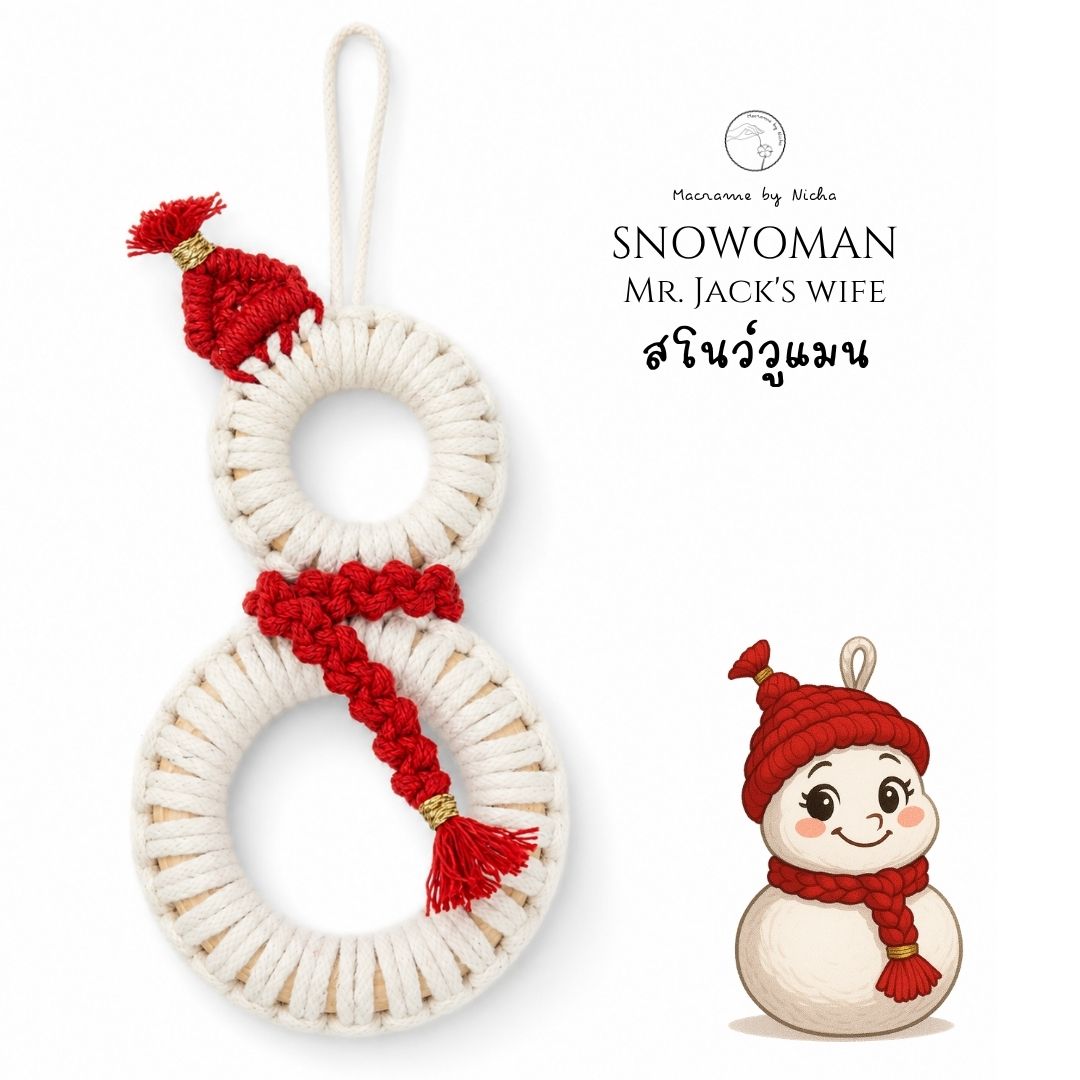
- SnowOman, his wife, THB 199, 8 x 15 cm
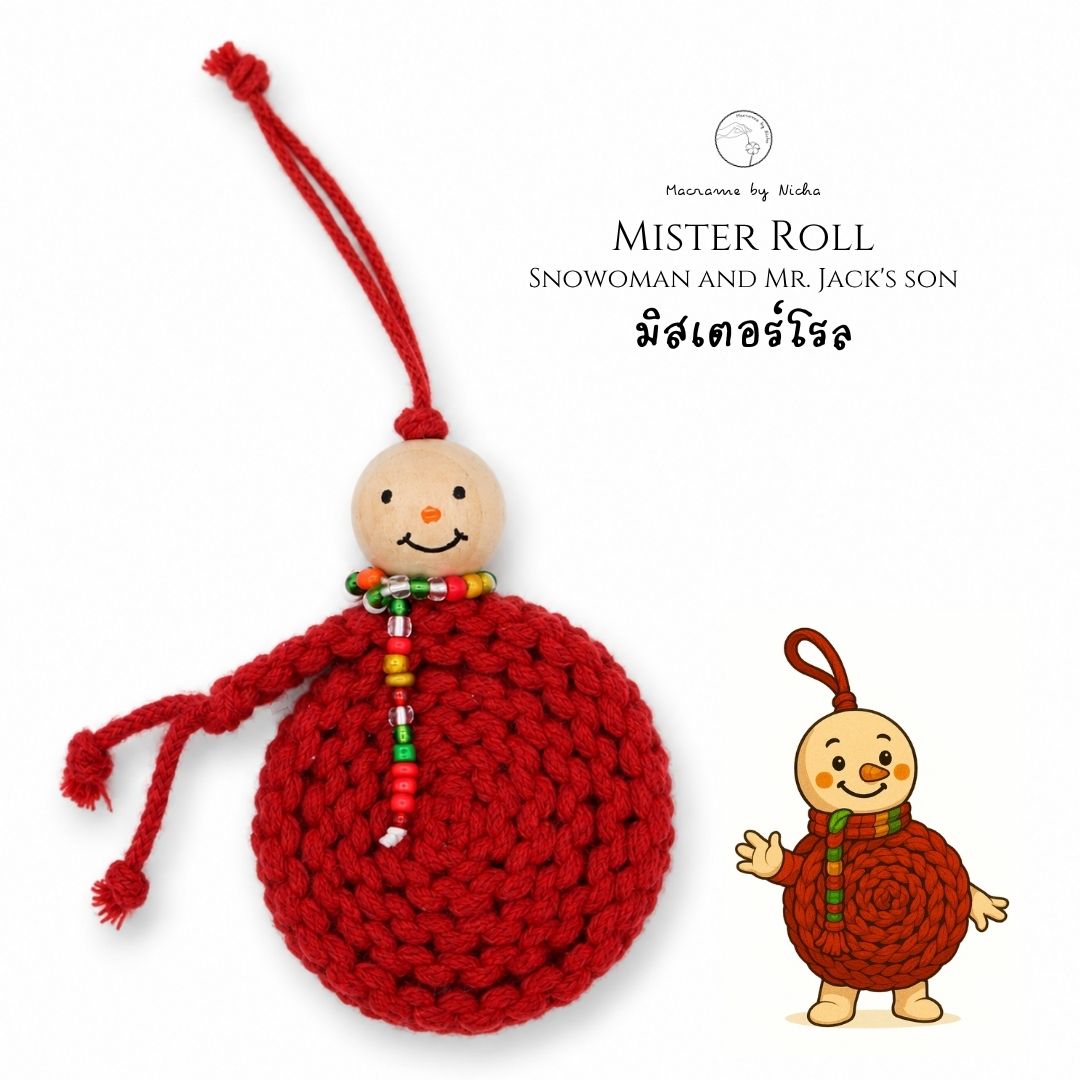
- Mister Roll, their five-year-old son, THB 179, 5 x 7 cm
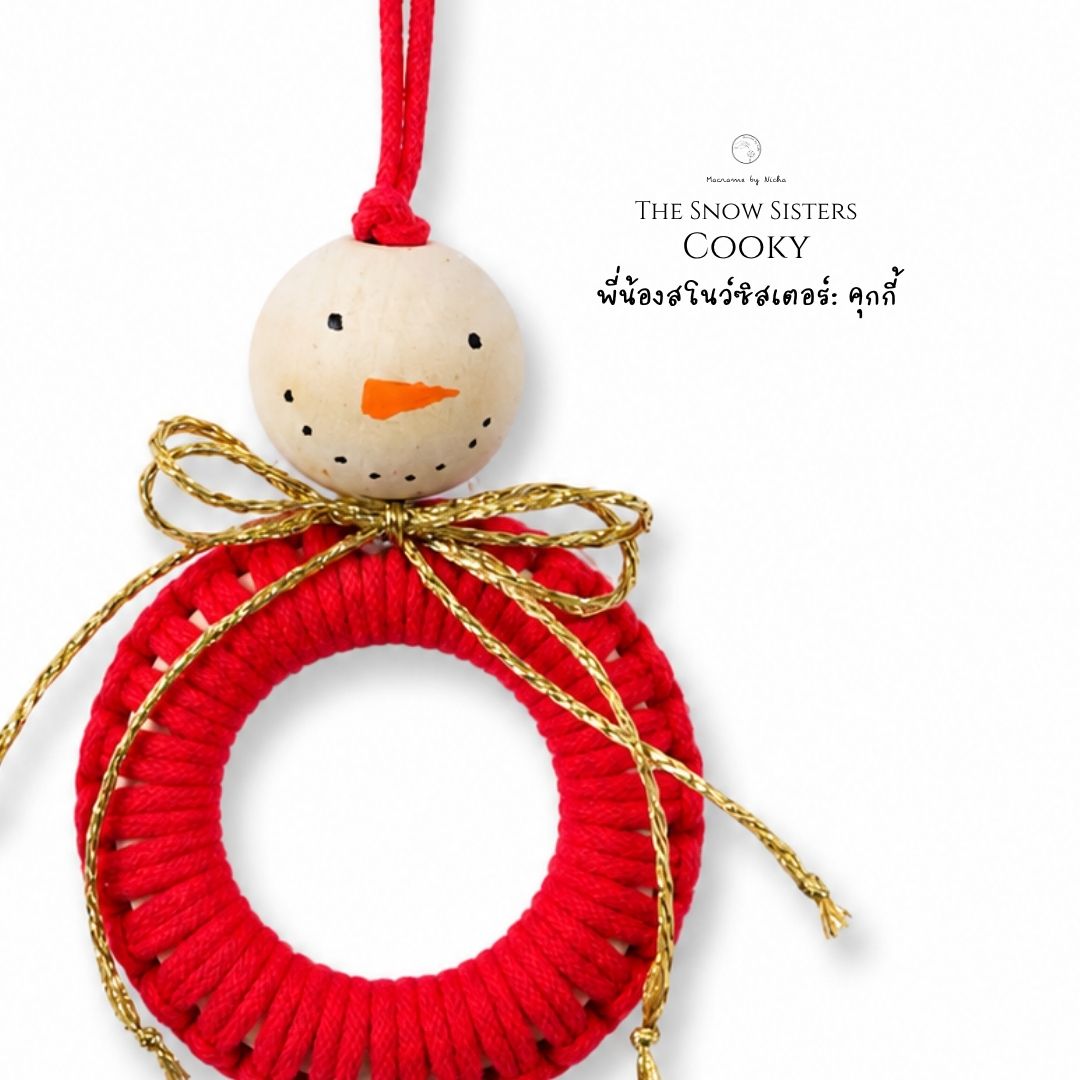
- The Snow Sisters, the triplets Fluffy, Icy and Cooky, THB 179, 10 x 7 cm
They share a branch happily with our rattan Christmas baubles, which put a little Thai texture between the white cotton.
They also belong with the rest of the December cast. Read who Santa Claus is, and meet Santa's nine reindeer and their names.
Questions people ask
What is a snowman?
A snowman, ตุ๊กตาหิมะ (snow doll) in Thai, is a figure of packed snow. The western form is three stacked balls of decreasing size with stick arms, coal or stone eyes, a carrot nose and usually a hat or scarf. Japan's version, the yuki daruma (snow Daruma), uses two balls and rarely has arms.
Why does a snowman have three balls?
Three balls of decreasing size, roughly a 3:2:1 ratio in diameter from bottom to top, give the figure a base wide enough to carry the weight above it and a head small enough to stay put. It is the western convention; the Japanese yuki daruma (snow Daruma) manages with two.
Why does a snowman have a carrot nose?
The earliest pictures show a pointed nose of unspecified material, and the 1853 Dillwyn photograph uses coal for the features. The carrot is a 20th-century convention that stuck because it is cheap, available in winter and naturally pointed. The first documented use is not settled.
When was the first snowman?
The earliest known picture of a snowman is a margin drawing in a 1380 Book of Hours, a Christian prayer book, held at the Royal Library in The Hague. It was identified by Bob Eckstein, author of The History of the Snowman. The first known photograph came later, around 1853, by Mary Dillwyn in Wales.
Does it snow in Thailand?
No confirmed snowfall has ever been recorded in Thailand. The event people cite, Chiang Rai on 7 January 1955, is described by experts as hail that looked like snow, and the frost on Doi Inthanon is frost. The snow at Bangkok's December mall shows is machine-made.
Who is Frosty the Snowman?
Frosty, brought to life by a magic hat, is the snowman of the 1950 song by Walter "Jack" Rollins and Steve Nelson, first recorded by Gene Autry. Rankin/Bass turned him into a television special for CBS on 7 December 1969, narrated by Jimmy Durante. The lyric never mentions Christmas.
If your tree this year could use a snowman that never melts, Mister Jack and his family would be glad to come. Everything is made to order.