


The Christmas Star: What It Means, Where It Comes From, and Why It Sits on Top of the Tree
The Christmas star stands for the Star of Bethlehem, the light in Matthew 2 that led the wise men to the newborn Jesus. It has sat on top of the Christmas tree since at least the 1840s, and it means the same thing up there: hope, guidance and a light worth following.
Here is what the Gospel actually says, what astronomers think that light may have been, how the star climbed to the top of the tree, the German star with 26 points, the star lanterns of the Philippines and Sakon Nakhon, and the cotton stars we make in Chiang Rai.
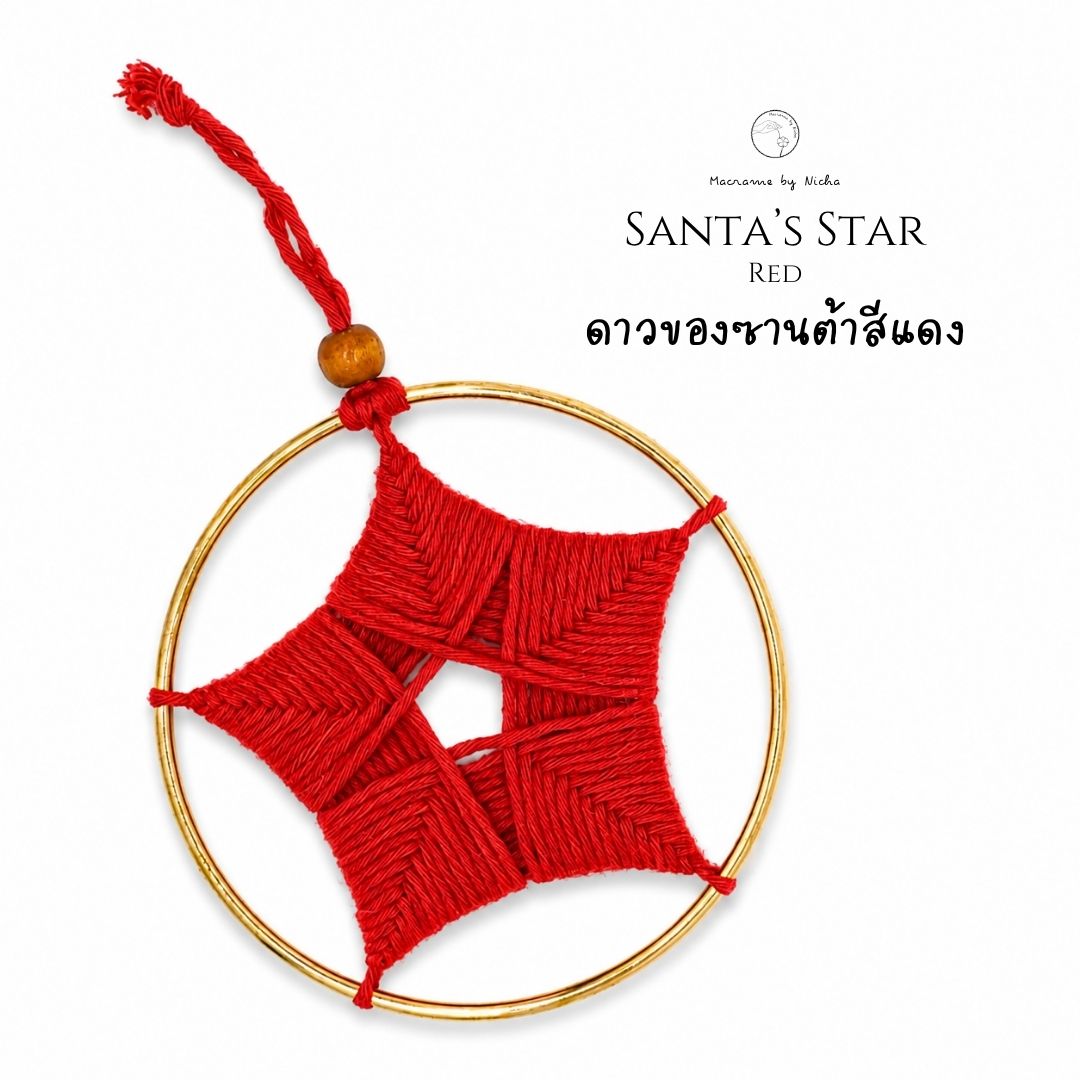
And if you would like to meet a star with a story of its own before you read the long one, Santa keeps his right here.
What the Christmas star means
The Star of Bethlehem in Matthew 2
The star appears in one place in the Bible: Matthew 2:1 to 12. Wise men from the east arrive in Jerusalem and explain why: "we have seen his star in the east, and are come to worship him" (Matthew 2:2, KJV).
A few verses later the star moves ahead of them: "the star, which they saw in the east, went before them, till it came and stood over where the young child was" (Matthew 2:9).
That is the whole account. A light appears, it leads, and it stops over the child. Everything the Christmas star means today comes from those few lines.
Luke has no star
Luke's nativity, Luke 2:1 to 20, tells the story from the other side. Its visitors are shepherds, sent by an angel, and there is no star in it at all.
Matthew is the only one of the four Gospels that mentions either the star or the wise men.
Three wise men, and their names
Matthew never says how many wise men there were. He lists three gifts, gold, frankincense and myrrh, and the number three grew out of that.
The names Caspar, Melchior and Balthasar first appear in a Latin text of the 8th century, translated from a Greek original about two centuries older.
The Thai word: a star, and only a star
Thai Wikipedia opens its article with both names side by side: ดาวแห่งเบธเลเฮม (Star of Bethlehem), or ดาวคริสต์มาส (Christmas star). So ดาวคริสต์มาส (Christmas star) is the recognised Thai name for the star in Matthew, and for the star on the tree.
The red-leaved plant that fills nurseries in December is a different thing in Thai. It is ต้นคริสต์มาส (Christmas plant), คริสต์มาส (Christmas) or พอยน์เซตเทีย (poinsettia), and the Thai plant pages never call it a star.
What the star actually was
Jupiter and Saturn, 7 BC
In 7 BC Jupiter and Saturn passed each other three times in the constellation Pisces, in May, September and December. Johannes Kepler tied that triple conjunction to the nativity in the early 1600s, after watching the supernova of 1604.
Royal Museums Greenwich points out the catch: the two planets were never close enough to look like a single object, though the pairing may have carried astrological meaning.
The Chinese record, 5 BC
The Han shu, a Chinese court history, records that in the spring of 5 BC a sui-hsing appeared in the region of Capricornus and stayed visible for more than 70 days.
Humphreys read it as a comet. Mark Kidger read it as a nova.
In December 2025 Mark Matney argued for the comet again in the Journal of the British Astronomical Association. The sources still differ, so the honest label is comet or nova.
Jupiter and Venus, 3 to 2 BC
On 12 August 3 BC Jupiter and Venus came within about 0.1 degree of each other, and on 17 June 2 BC they met again in Leo, near the star Regulus. Seen from Babylon they would have looked like one bright object. Roger Sinnott put this forward in Sky and Telescope in 1968.
Halley's Comet, and the rest
Halley's Comet passed in 12 BC and is ruled out as too early: Luke 3:23 puts Jesus at about thirty in AD 28 to 29, so the earliest likely birth year is 7 BC. No supernova remnant fits the period, and a meteor could not have been followed for weeks.
None of it is settled. Astronomy.com says none of these events matches perfectly and science will likely never know. Thai Wikipedia adds that many scholars read the account as theology rather than a record of the sky.
How the Christmas star got to the top of the tree
The 1840s: a factory star and a fairy tale
The eight-pointed star became a popular manufactured Christmas ornament around the 1840s, and people put it on top of the tree to stand for the Star of Bethlehem.
Hans Christian Andersen caught the fashion in print. The Fir-Tree, first published on 21 December 1844, describes the decorated tree with "at the very top a large star of gold tinsel".
1848: the Windsor Castle tree had an angel
The picture that spread the Christmas tree beyond the upper classes had an angel on it.
The Illustrated London News printed Queen Victoria and Prince Albert's tree at Windsor Castle in its Christmas supplement of December 1848: about eight feet tall, six tiers, and "on the summit of the tree stands a small figure of an angel, with outstretched wings, holding in each hand a wreath".
Star or angel
Both arrived in the 19th century and both still hold the top spot. The star stands for the light that led the Magi. The angel stands for Gabriel, the messenger of Luke 1.
The Moravian star, the star with 26 points
A geometry lesson in Niesky
One of the best-known Christmas stars began as schoolwork. In the 1830s, at the Moravian boys' boarding school in Niesky, Germany, a mathematics teacher had pupils build many-pointed stars to grasp geometry. The first ones were white and red.
The boys made them on the first Sunday of Advent and carried the habit home, and the star spread with the Moravian Church.
Herrnhut, 1897
Around 1880 a former pupil, Peter Verbeek, began selling stars and instructions from his bookshop. Around 1897 the Verbeek family started factory production in Herrnhut, with a metal-frame star that could be shipped flat and assembled at home.
The standard form has 26 points, 18 square and 8 triangular. It hangs from the first Sunday of Advent to Epiphany on 6 January, in churches, nativity scenes and homes wherever the Moravian Church is present.
Sweden's window star
The paper star glowing in Swedish windows every Advent is the same Herrnhut star. It reached Lund in the 1910s to 1920s with Julia Aurelius, the German-born wife of a bishop. German stars were imported in the 1930s, and Swedish mass production began in 1941.
The Froebel star, 16 points
Germany's other paper star is woven from four strips into eight flat prongs and eight cone-shaped tips, 16 points in all. It carries the name of Friedrich Fröbel (1782 to 1852), who used paper folding to teach geometry, though he probably did not invent it.
The Christmas star around the world
The Philippines: the parol
The Filipino parol takes its name from the Spanish farol (lantern). Under Spanish rule lanterns were carried in the Panunuluyan and Simbang Gabi novena processions, then hung outside houses. The five-pointed form came later, in the American period, and it stands for the Star of Bethlehem.
San Fernando in Pampanga turned it into a competition. The Giant Lantern Festival started in the early 1900s with bamboo lanterns about two feet across, was electrified in 1931, and now fields lanterns of about 20 feet carrying thousands of bulbs.
Poland: a star on a pole
From Christmas to Epiphany, Polish kolędnicy (carolers) walk from house to house behind a gwiazda kolędnicza (carolers' star) on a pole, built of cardboard and tissue paper, often lit and turning. The star leads them with good news from door to door, the way it once led the Magi.
The Christmas star in Thailand
ประเพณีแห่ดาวคริสต์มาส (Christmas star parade) at Tha Rae
Thailand has its own star festival. In 1982 the people of Tha Rae in Sakon Nakhon, Thailand's largest Catholic community, made paper stars to recall the star of the nativity and carried them to the cathedral. It has grown into the largest Christmas light event in the country.
The 2025 edition ran from 20 to 26 December, with a ขบวนแห่ดาวมือถือ (handheld star procession) on foot around Sala Martino and a ขบวนรถแห่ดาวคริสต์มาส (illuminated Christmas star float procession) setting off from the King Rama V monument plaza.
The community descends from Vietnamese Catholic migrants, and the star has become a symbol of that identity, Christian and Vietnamese at once.
A star on a Thai tree
Christmas is a working day in Thailand, and the tree with a star on top is popular all the same.
Ours are made for that tree. They are cotton and wood, handmade by Akha women in Asha village, Mae Yao district, Chiang Rai, through our Akha Ma-De programme, and they will still be hanging in January.
Our stars, made in Chiang Rai
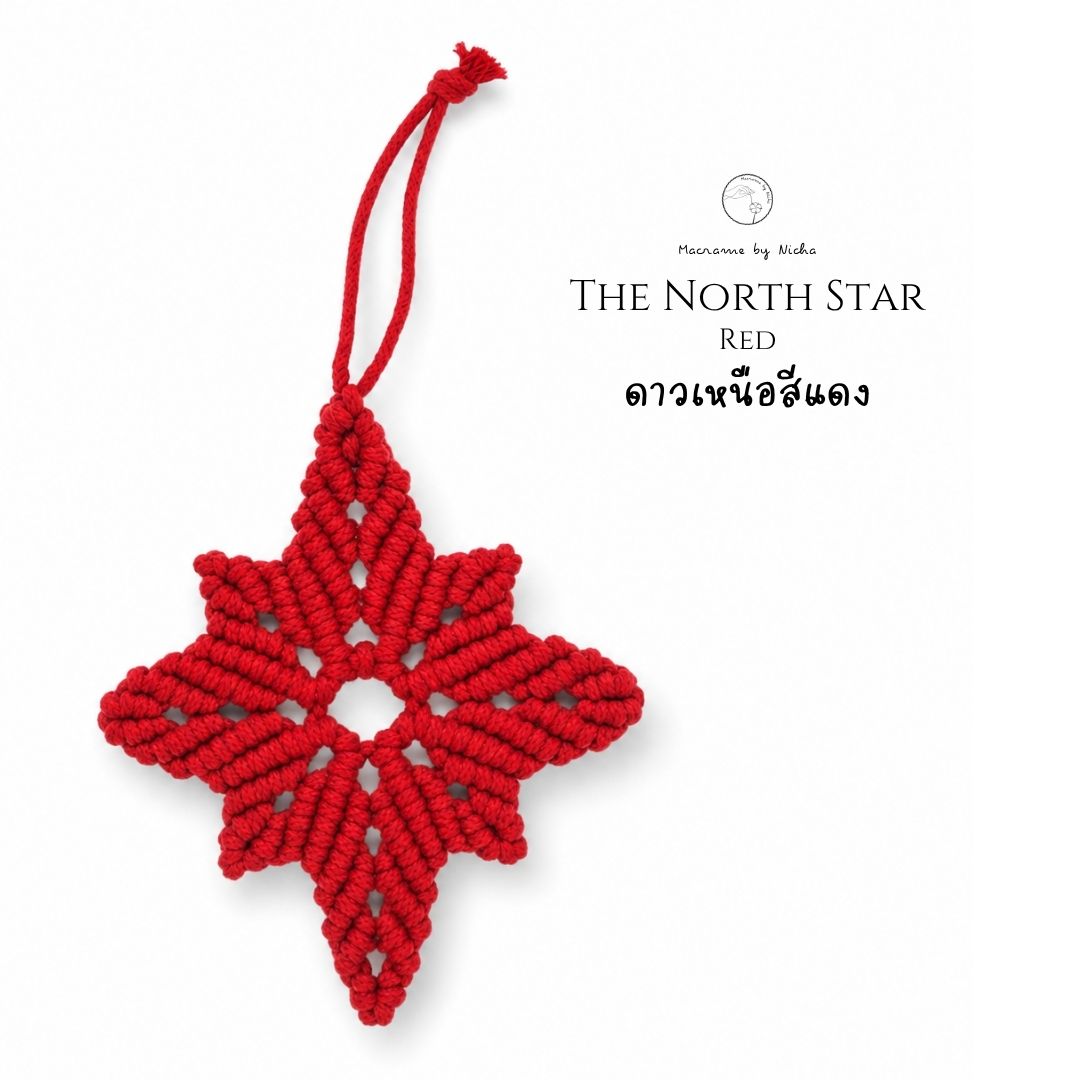
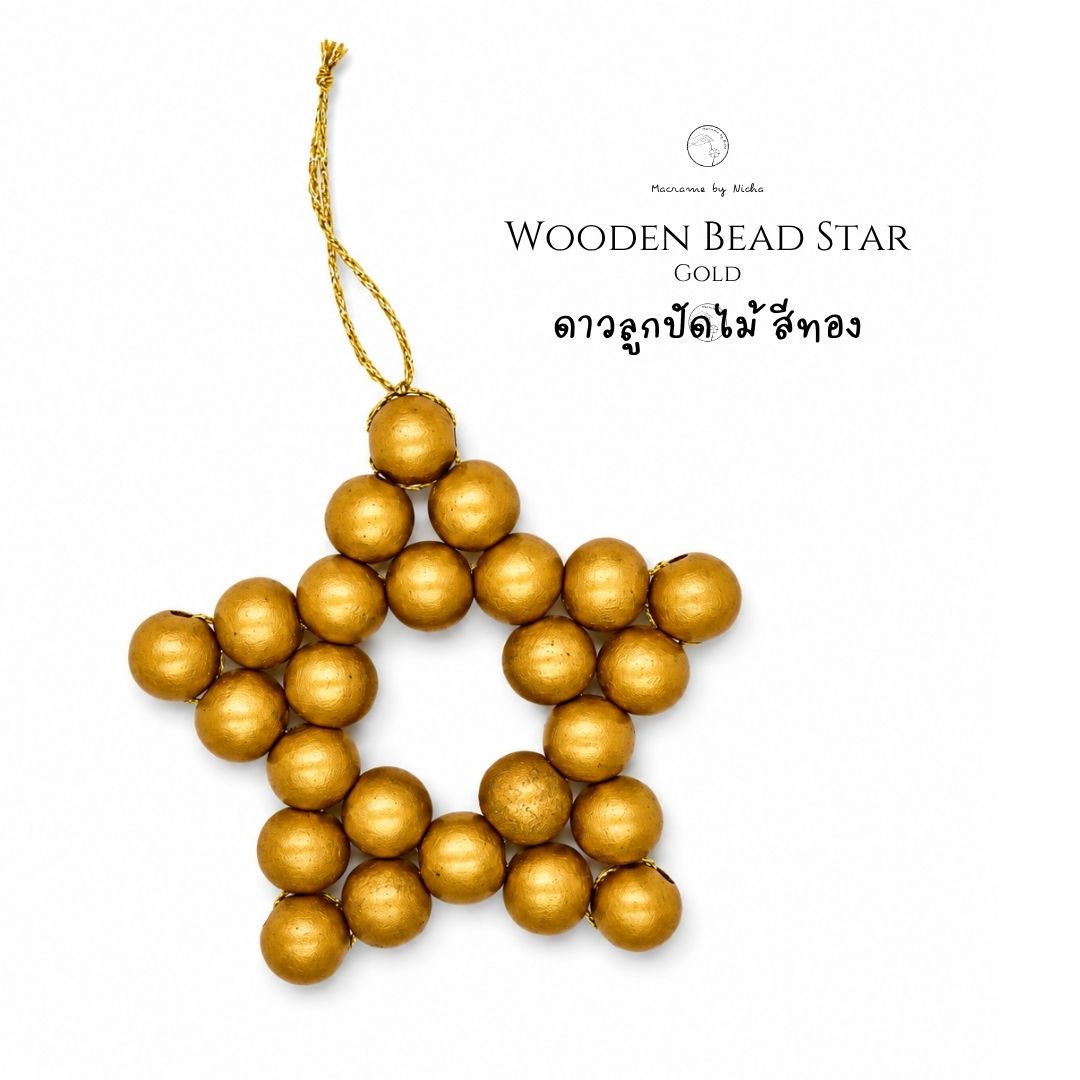
Three stars, three stories, all made to order: tell us how many you need and we make them.
- Santa's Star, THB 179, the amulet Santa carries on every Christmas flight
- The North Star, THB 209, 9 x 12 cm, guidance and hope in cotton
- The Wooden Bead Star, THB 209, 9 x 12 cm, natural wood and cotton
A star rarely hangs alone. Our cotton Christmas bell is the piece that usually hangs beside it, and our rattan Christmas baubles fill the branches in between.
Which star for which tree
Santa's Star is about 10 cm across, and the North Star and the Wooden Bead Star are 9 x 12 cm. On a tabletop tree one of them is the top piece. On a tree of 1 to 1.5 m, three or four of them spread through the branches read as a constellation. On a full-height tree they work as accents around a larger topper.
The star also belongs with the rest of the December cast. Read who Santa Claus is, find out why we hang a Christmas stocking, and learn what a snowman is when it is made of cotton.
Questions people ask
What does the Christmas star mean?
The Christmas star stands for the Star of Bethlehem, the light in Matthew 2 that led the wise men to the newborn Jesus. By extension it means hope and guidance, which is why a star sits at the very top of the tree, above everything else that hangs on it.
Why is a star put on top of the Christmas tree?
The treetop star represents the Star of Bethlehem, which "went before" the wise men and "stood over where the young child was" (Matthew 2:9). Placing it highest honours that guiding light. Stars have topped trees since at least the 1840s, when Andersen's The Fir-Tree described a star of gold tinsel.
What was the Star of Bethlehem?
Nobody knows for certain. The leading candidates are the triple conjunction of Jupiter and Saturn in 7 BC, the object Chinese astronomers recorded for over 70 days in 5 BC, a comet or a nova, and the Jupiter and Venus conjunctions of 3 to 2 BC. None of them fits perfectly.
How many points does a Christmas star have?
There is no fixed number. Five points is the common treetop form and the shape of the Filipino parol. The eight-pointed star was the popular manufactured ornament of the 1840s. The Froebel paper star has 16 points, and the Moravian star from Herrnhut has 26.
Is the poinsettia the Christmas star?
In German the plant is Weihnachtsstern (Christmas star) and in Swedish julstjärna (Christmas star), so the overlap is real in those languages. In Thai, ดาวคริสต์มาส (Christmas star) means the star, and the plant is ต้นคริสต์มาส (Christmas plant) or พอยน์เซตเทีย (poinsettia).
Where is the Christmas star in the Bible?
Only in Matthew 2:1 to 12, where the wise men see the star in the east and follow it to the child. Luke's nativity, Luke 2:1 to 20, has shepherds and an angel and no star at all. Matthew is the only Gospel to mention either the star or the Magi.
If the top of your tree this year is waiting for a star with a story, ours are ready to travel from Chiang Rai. Everything is made to order.